
Bringing a dog or cat to Australia
Last verified: 2026-08-25
Australia is one of the few countries in the world that remains free of rabies, and its pet-import system exists to keep it that way. That single fact explains almost every rule you are about to meet: the long waits, the unamendable documents, the mandatory quarantine.
The pathway, in order
microchip → identity check → rabies vaccination → RNATT → 180-day wait → import permit → quarantine booking → parasite treatments → final vet check → travel to Melbourne → quarantine at Mickleham
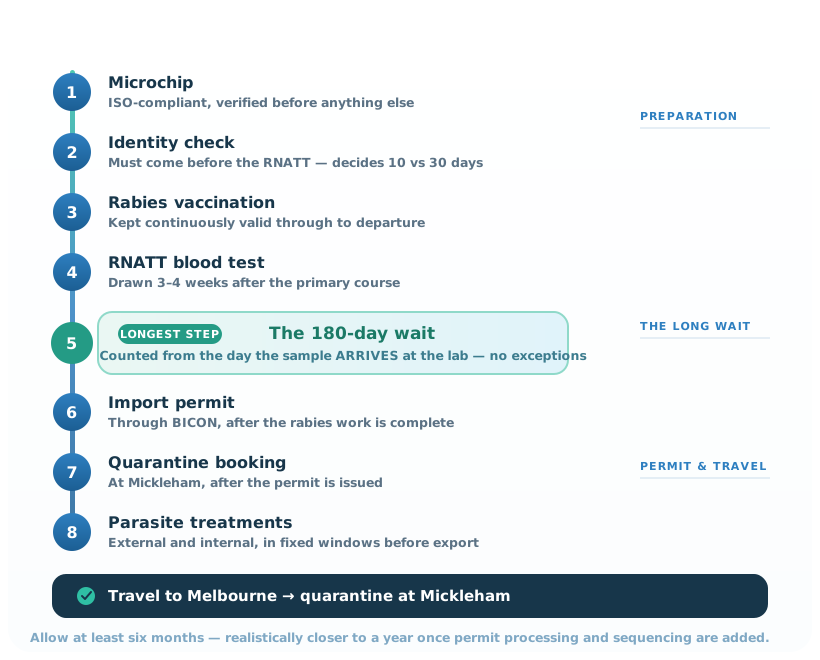
Allow at least six months. The 180-day wait alone is roughly six months, and it does not start until the microchip, the identity check, the vaccination and the blood test are already behind you. A year is a more realistic planning figure for most people.
The five things that decide your move
1. Your country’s group. The United States, Great Britain and Canada are all Group 3 — rabies present but well controlled — which triggers the full rabies pathway: 180 days’ residence in an approved country, current vaccination, a valid RNATT, and a declaration from your competent authority.
2. The date the blood sample reaches the laboratory. The 180-day wait runs from the day the RNATT sample arrives at the laboratory — not the draw date, not the result date. There are no exceptions to it, and it is a residency period, not quarantine: your pet lives normally through it.
3. Whether you did the identity check first. Optional, and it halves quarantine from a minimum of 30 days to a minimum of 10. It must happen before the RNATT and in a separate visit. The department’s own cost estimates: AUD 3,114 with 10 days versus AUD 4,234 with 30 — a decision made months before you book a flight.
4. The import permit. Applied for through BICON once the rabies work is complete. AUD 626 for the first animal, usually 20–40 business days but occasionally far longer. It is valid only until your RNATT expires, and it must be valid on the day your pet arrives.
5. How your pet travels. Cats and dogs must arrive directly into Melbourne and must travel as manifest cargo — never in the cabin. Quarantine is at the Mickleham facility near Melbourne, wherever in Australia you are actually moving to.
Where the pathway forks
- Dogs need three extra blood tests (Leishmania, Leptospira, Brucella) and face a list of prohibited breeds and wolfdog hybrids.
- Cats need no extra blood tests, but face a hybrid ban that has excluded Bengals since 1 March 2026.
Start with your origin country
- From the United States — two accredited vets for the identity check, and three extra blood tests for dogs
- From Great Britain — OV66-authorised vets only, and a process that cannot be added retrospectively
- From Canada — CFIA certificates, and a canine influenza requirement no other corridor has
Only these three origins are covered here. See exactly what is supported.
Work through the requirements
- Country groups and what Group 3 means
- Microchip standard and why identity comes first
- Rabies vaccination validity and the RNATT
- The identity check and 10 versus 30 days of quarantine
- Earliest travel date
- The import permit and quarantine booking
- External and internal parasite treatments
- Melbourne-only arrival and manifest cargo
What is not covered here yet
The airline layer beyond arrival and travel mode, arrival and quarantine-release procedure, and the guides and automated plan. Those pages exist in the plan and are being written and verified; they are absent rather than half-answered.
Sources
- How to bring your dog to Australia from a Group 3 country — Department of Agriculture, Fisheries and Forestrydestination_import
- How to bring your cat to Australia from a Group 3 country — Department of Agriculture, Fisheries and Forestrydestination_import
- Rabies vaccination and tests for cats and dogs coming to Australia — Department of Agriculture, Fisheries and Forestrydestination_import
- Import permits for cats and dogs coming to Australia — Department of Agriculture, Fisheries and Forestrydestination_import
- Cats and dogs frequently asked questions — Department of Agriculture, Fisheries and Forestrydestination_import